1
Cylindrical shell
The resonating body is hollow and wooden. Kerala Tourism says jackfruit wood is commonly used, but the exact wood must be verified for a specific instrument.
A source-backed introduction to the form, sound-making structure and performance contexts of Kerala's powerful cylindrical drum.
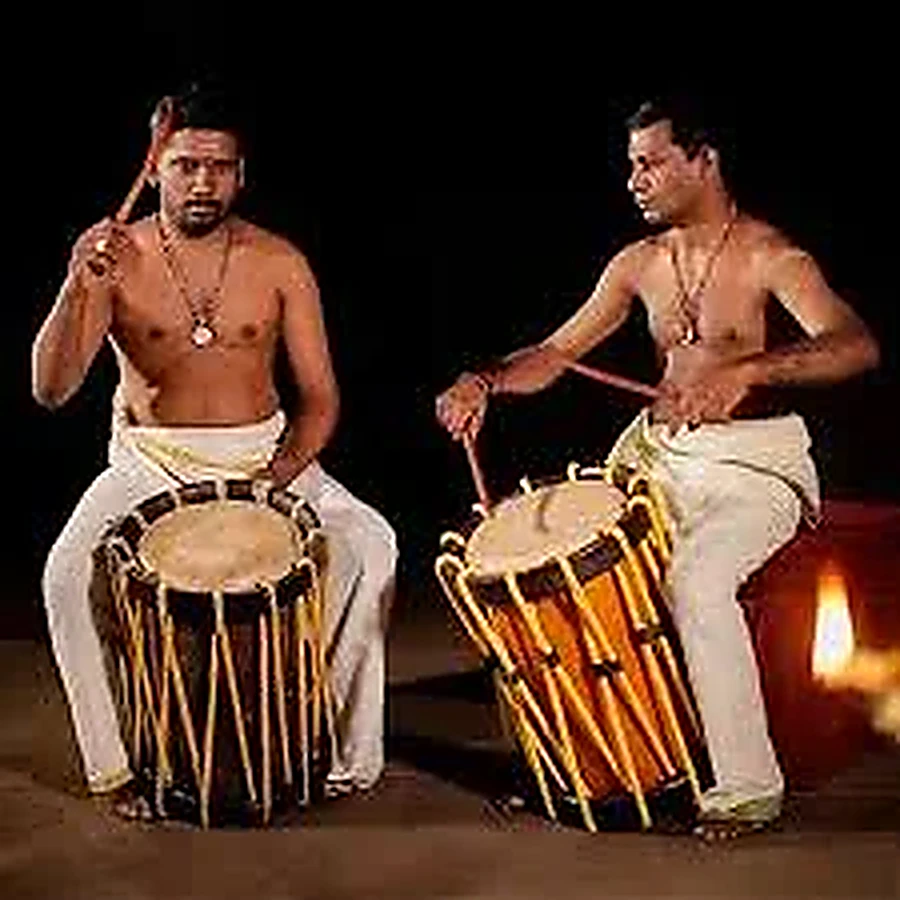
Kerala Kalamandalam describes the Chenda as a hollow cylindrical wooden drum. Its openings are fastened with hide, side strings are adjusted for the desired tension, and it is played with two sticks.
Kerala Tourism also describes the instrument as central to Kerala's ritual, classical and cultural performance life. Its strong projection makes it especially recognisable in outdoor and theatrical contexts.
The resonating body is hollow and wooden. Kerala Tourism says jackfruit wood is commonly used, but the exact wood must be verified for a specific instrument.
Both openings carry hide or parchment heads. Exact materials, layering and preparation can vary by maker and specification.
Side lacing holds the heads and is adjusted for tension. Tension affects sound, so adjustment should follow maker or teacher guidance.
Official cultural sources document it across theatre, ritual, percussion orchestras and processional traditions.
An officially documented Chenda type used in Kerala performance traditions. The required role, build and playing specification should be confirmed with the teacher or ensemble rather than inferred from a sales label.
A distinct officially documented Chenda type. Because the musical role changes with context, a new buyer should not substitute it for another type without expert direction.
Kairali's approved course register lists Kerala Chenda Drumming under Indian Percussion, taught by Nakul Kallat at AED 300 per month. The course description covers traditional vertical drum playing with sticks for festive ensembles. Current timetable, intake and level suitability are confirmed on enquiry.
No. Both are Indian percussion instruments, but the Chenda is a Kerala cylindrical drum usually played in a vertical or suspended position with sticks; the Mridangam is a different two-headed Carnatic drum played horizontally with the hands.
Do not choose from “beginner” or “professional” wording alone. Ask the teacher which Chenda type, playing role and physical specification the curriculum requires.
Official sources say jackfruit wood is usual or common, but Kairali will confirm the exact shell material for the instrument being offered. A general tradition should not be converted into an item-specific claim without evidence.
Yes. The product is made on request. Exact type, materials, dimensions, included parts, preparation time, packing, shipping charge and lead time should be confirmed in writing before payment.
Use the buying guide before opening a product enquiry. It turns “I want a Chenda” into the questions a teacher and supplier can answer.